A potpourri of life and what to do when it hands you lemons, fruits, & nuts!

Friday, November 23, 2007

In Sweet Memoriam...

The little dog to the left is the closest image of our Phoebe. Just like this little pupper, she was always SMILING!!!
I have been putting off writing for several days because there is much sadness in my heart. Last week, family members had to say "good-bye" to our favorite little dog, Miss Phoebe Alouisius, who was 16-1/2 years old. Some would say that it's 'just an animal' but, to us, she wasn't just any animal; rather, she was one of the girls.
Whenever there was a gathering of the girls, she would be directly at our side, especially at the breakfast, lunch, or dinner table. She would make it a point to come sit by me --[she knew me as Dibley -- long story -- don't ask!] -- and look up with those big brown eyes. Uh-huh -- she was right there, just waiting for that little crumb to drop to the floor. Sometimes, she would have to wait quite a bit and that would be annoying to her, as she would "stamp" her little paw, as if to say,


"Hello, Dibley ... don't forget ... I'm down here waiting ... don't forget about me ... where's that crumb of food you promised me ... we can get away with it ... just drop it quickly ... mommy won't know ... she'll never know what hit the floor because it'll be gone faster than she could ever find it ... don't worry, I'll get it ... I'm a fast gobbler ... c'mon ...! WOW! It's about time ... oh goodie ... that was yummy ... can I have more?"

Phoebe and I had our own communication and she loved to play. The minute she saw me coming, first she would stick her nose into my bag to see [or sniff] if I brought her a treat or a toy. Then, satisfying that curiousity, she would run to her "toybox" and find a toy that we could play "tug-of-war" with and, usually, she would win ... a very strong little dog, indeed! She liked to wear her pretty leash and allow us to take her for walks. Actually, she would take "us" for walks ... not the other way around. She knew the way to go and we just followed. She liked to go to the playground where she could run free and we would play ball. Sometimes, she would tease us and hold on to that ball as if to say, "I dare you to take it away!" Her traits were better than most humans because she was quiet and never barked back, friendly and loyal, playful and affectionate, clever and determined, and totally independent!


For 16-1/2 years, she entertained us with her playfulness and special kisses and her love of human kind ... well, most human kind. Phoebe could be very aggressive towards other dogs, especially, smaller ones like herself. She was a brave little dog but always thought that she was one of the bigger dogs and wasn't afraid of being aggressive with them, either!
There will always be other little dogs, but there will never be another Phoebster. She truly was one-of-a-kind ... a very special little Jack Russell Terrier ... in all of her scruffiness! Her sweetness will always remain in our hearts.

Saturday, November 10, 2007

Gobble ... Gobble ... Talking Turkey!


Names for a Much-travelled Bird
-- by Michael Quinion
[Mr. Quinion writes on international English from a British viewpoint.]


About 1530, a new dish began to be put on English tables, a fowl a little larger than the traditional goose, but with a lot more meat and a refreshingly new taste. This bird had been brought to England by merchants trading out of that area of the eastern Mediterranean called the Levant but whom the English called “Turkey merchants” because that whole area was then part of the Turkish empire. The new bird was therefore called a “Turkey bird”, or “Turkey cock”. Within a few years it had become a favourite and familiar domestic fowl, to the extent that, sixty years later, Shakespeare knew his groundlings would understand the reference to the turkey’s aggression display of blowing out its breast and strutting when he described the posturings of Malvolio in Twelfth Night:

SIR TOBY BELCH: Here’s an overwheening rogue!
FABIAN: O, peace! Contemplation makes a rare turkey-cock of him; how he jets under his advanced plumes!

The interesting thing about the mistake over the turkey’s origins is that the English were the only people to believe they came from Turkey; nearly everyone else, including the Turks, thought they originated in India, or at least in the place they then thought was India. Turkeys actually came from Mexico and were first brought back from there about 1520, at a time when that area was called The Spanish Indies or the New Indies, illustrating the confusion in people’s minds about the true location of this new land that Columbus had found. As a result, a lot of European languages, as well as others like Arabic and Hebrew, called it something like the “bird of India” (for example, indianischer Hahn in old German).

But in a few languages, including Danish, Dutch, Finnish and Norwegian, the bird was named instead as coming from Calicut (Dutch kalkoense hahn, Danish kalkun), which is a seaport on the Malabar coast of India, the same place after which calico is named. As the turkey didn’t reach India for about a hundred years after its European introduction and naming, this looks mysteriously specific. But there may be an explanation. The turkey was introduced into Europe only about twenty years after the Portuguese explorer Vasco da Gama had pioneered the route round the Cape of Good Hope, up the east coast of Africa and across to India, where he landed in 1498 — at Calicut. It could be that people made the connection “bird of India” = “bird of Calicut” because they had heard about the Portuguese explorations and mistakenly thought the bird had been brought back from there, instead of the New Indies.

To compound the difficulties the English had with this immigrant, at about the same time, the 1530s, Portuguese merchants reintroduced the guinea-fowl from West Africa, which had last been seen in England at the time of the Romans. As it was the same Levant merchants who brought this into the country, the guinea fowl was also known for a time as the Turkey bird, though this confusion didn’t last long. For example, the heraldic arms granted to William Strickland in 1550 featured “a turkey-bird in his pride proper” and the bird shown is quite definitely a proper turkey. The only surviving instance of this confusion between the turkey and the guinea-fowl — but it’s a big one — was caused by Linnaeus; when he invented the new generic name for the turkey and its relatives he called it meleagris, which had been the name in classical Rome for ... the guinea-fowl.

As an aside to this, and to illustrate the total confusion over its origins by everyone, when the turkey did arrive in India, it was brought there via the Spanish possessions in the East Indies, and one name for it was the “Peru bird”, most probably because that was what the Portuguese, with their strong colonial presence in India, called it; still quite wrong, because there were no turkeys in Peru, but at least they had the right area of the world.

And the domestic turkey was re-introduced into North America from Britain, taken there circuitously by the colonists of New England and Virginia, who were surprised to find it living there wild. Benjamin Franklin once suggested its wild cousin should become the national bird of the United States. If of any country, it should be Mexico of course, but because of its wide travels and the total confusion over its origins, perhaps instead the turkey ought to be the official bird of the world.

________________________________________


___________________________________________

Wishing You A Happy Thanksgiving With All Its Abundance And Blessings!

Thursday, November 1, 2007

Smile Pretty for the Camera!


Happy smiles to you! Aren't these the cutest little smilies you've ever seen? That's what I thought when I looked at them. Whoever knew that Orchids could smile like this? YES ... I did say, "ORCHIDS"! This photo for this particular strain of Orchid was taken at Tower Hill Botanical Gardens in Boylston, Massachusetts. Tower Hill is the headquarters of the Worcester County Horticultural Society, is located on 132 acres, and was established in 1986. To see the current events that are taking place at this breathtaking museum, you may check out their website: http://www.towerhillbg.org/ where you will find extensive information about their history, gardens, features, programs and other exciting events.

On a lovely Sunday afternoon in October, my husband and I went there and, of course, he is a photography hound, so he brought along his favorite, trusty camera and photographed some of the Orchid species that were being shown (with a little prompting by 'you-know-who' as to which ones he should concentrate on)! This darling species did so amuse me (but, it doesn't take much!) and I just had to have a photo of it. If you are ever in the area, do stop by and take a tour through the beautiful gardens, especially if the weather is agreeable. Otherwise, there are many plants, trees, shrubs, and other flowers that you can see indoors. They also have a lovely cafe that serves delicious meals and desserts and a terrific gift shop for those who like to poke about and shop.
Although we are members of Tower Hill, it is not necessary for anyone else to be a member. However, if you do decide to take a yearly membership, it will be money well spent because after just a few visits, you have more than received back the money invested and rewarded yourself with knowledge, at the same time. You can even go there on a 'daily' basis if desired, even if it's just walking about the property, and reaping the benefits of some great exercise for your whole being!
CHEERS!

Sunday, October 28, 2007

"Chocolate Cream Pie"


No ... I'm not giving you a recipe for chocolate cream pie. Rather, I'm going to relate a cute and humorous story about a long-time church friend, who just went home this past Thursday.
First, though, I'm still in a bit of shock ... I guess we never know what's in God's plan for us. He must have decided that Noel (pron. Noelle) had suffered enough disappointments and illnesses in her time here on this earth so, now, it was time for her to take the journey home to be with Him. I guess her heart just couldn't take one more beat. I know she is happier, now, that she is safe at home with all her loved ones who had gone on before her. Meanwhile, she will be missed by her husband and their cute little white Maltese dog, who they affectionately called Chrissy!


So, you might wonder why I would want to remember Noel with this story. It's because whenever I hear about or see a chocolate cream pie, this thought immediately comes to mind and I have toHappy[smile] because it makes me happy and, quite honestly, this is way I choose to remember her!

Noel's husband and mine both belonged to one of the church committees and a meeting was taking place on this particular evening. So, she decided that it would be a good idea if we had dinner together at their home. We enjoyed a nice dinner and told the men to go off to their meeting and they could have dessert when they returned home. Meanwhile, Noel said that she was going to make a Chocolate Cream Pie, refrigerate it, and by the time the "guys" come back, the pie will be well-chilled and ready. While Noel prepared the pie, I played with the dog!

The men called to let us know they were on their way home. Good timing. We had just finished making the coffee and got out the whipped cream to put on top of the Chocolate Cream Pie. The car pulls up to the house, little Chrissy runs to greet them, they come in, Noel gets out the cups and pie server and tells her hubby to do the honors by cutting the pie. Our mouths are watering and we can't wait to try it.

Dennis begins to cut the pie ... but, wait a minute ... what ever seems to be the problem? He remarks that the pie is a little tough to cut. TOUGH? He further remarks, "Noel, what did you put in this pie -- leather?" She looks at him and tells him to give HER the pie server and she'll cut it. "Hmmm! I don't understand it," says she, "It seemed to be okay when I made it." I offered to give a hand but wasn't sure if I could do any better. I started cutting and then noticed something under the pudding -- "What's this?" says I, "Oh, no! Noel, look!" We saw what the problem was and now we knew the reason why it was so difficult to cut this pie. All of a sudden, we burst out laughing!

Of course, our men looked at each other and asked us, "WHAT's so funny??!!!" We explained the situation ... you see, Noel started with a store-bought graham cracker crumb crust. Inside the crust is a plastic form, which keeps the crust in tact. Inside the plastic form, is an instructional paper, which explains how to use the crumb crust. Yes, Noel removed the plastic form; however, and for whatever reason, she replaced the piece of paper and then poured the chocolate pie filling on top -- NEVER noticing the paper -- and put in the refrigerator to chill.
[My hubby Roy remarked something about paper and fiber!!]

We ended up eating the pie, which was delicious -- minus the paper, of course! I know this may be a little hard to believe, but it's a true story, and that was "our Noel!"


Friday, October 26, 2007

Fleur-de-lis


It's Upside-Down!

I remember when our cousin had her first house built and it came time for the wallpaper to be put up. She came home early one afternoon to discover that the paper hangers had put her new wallpaper upside-down. The paper hanger looked at it and remarked, "Are you sure, ma'am? It looks okay to me." Our cousin looked at him, laughed and said, "It's a fleur-de-lis -- a flower -- you hung it upside-down!"
Needless to say, the paper hanger had to remove and re-hang the wallpaper. Then, it was a perfect fleur-de-lis wall hanging.
Flowers
The fleur-de-lis (or fleur-de-lys; plural: fleurs-de-lis) is a stylised design of an iris flower which is used both decoratively and symbolically. It may be purely ornamental or it may be "at one and the same time political, dynastic, artistic, emblematic and symbolic", especially in heraldry. While it has appeared on countless European coats of arms and flags over the centuries, the fleur-de-lis is particularly associated with the French monarchy. It is an enduring symbol of France, but, being regarded most notably as the emblem of the monarchy, was not adopted officially by any of the French republics. In North America the fleur-de-lis is often associated with areas formerly settled by France, such as Quebec and Louisiana and with the Francophones in other Canadian provinces. It is also the emblem of the Swiss Municipality of Schlieren, Zürich.
It appears on military insignia and the logos of many different organizations, and during the 20th century it was adopted by various Scouting organizations worldwide for their badges.

Architects and designers may use it alone or as a repeated motif in a wide range of contexts, from ironwork to bookbinding.

As a religious symbol it may represent the Holy Trinity, or be an iconographic attribute of the archangel Gabriel, notably in representations of the Annunciation. It is also associated with the Virgin Mary.

The symbol is also often used on a compass rose to mark the north direction, a tradition started by Flavio Gioja.

This information was obtained from: http://en.wikipedia.org/wiki/Fleur-de-lis


Wednesday, October 24, 2007

Nothing Like that Good Old Flavor!


I had been chewing this little piece of sugarless gum for about 2 hours and, suddenly, the strawberry-lime flavor was gone! As I was throwing it away, I started singing that old familiar rock 'n' roll song, probably circa 1960's, "Does Your Chewing Gum Lose Its Flavour", by Lonnie Donegan & His Skiffle Group. If you've never heard it, it's quite a catchy tune and the words are humorous, indeed.
So, with that little bit of information, here are the lyrics, which I obtained from: http://www.digitaldreamdoor.com/pages/lyrics2/nov_doeschew.html.

"Does Your Chewing Gum Lose Its Flavour"
Recorded by: "Lonnie Donegan & His Skiffle Group"
Oh-me, oh-my, oh-you
Whatever shall I do
Hallelujah, the question is peculiar
I'd give a lot of dough
If only I could know
The answer to my question
Is it yes or is it no

Does your chewing gum lose its flavour
On the bedpost overnight
If your mother says don't chew it
Do you swallow it in spite
Can you catch it on your tonsils
Can you heave it left and right
Does your chewing gum lose its flavour
On the bedpost overnight

Here comes a blushing bride
The groom is by her side
Up to the altar
Just as steady as Gibraltar
Why, the groom has got the ring
And it's such a pretty thing
But as he slips it on her finger
The choir begins to sing

Does your chewing gum lose its flavour
On the bedpost overnight
If your mother says don't chew it
Do you swallow it in spite
Can you catch it on your tonsils
Can you heave it left and right
Does your chewing gum lose its flavour
On the bedpost overnight

Now the nation rise is one
To send their only son
Up to the White House
Yes,the nation's only White House
To voice their discontent
Unto the Pres-I-dent
They pawn the burning question
What has swept this continent

(Lonnie speaks) If tin whistles are made of tin
What do they make fog horns out of
Boom, boom

Does your chewing gum lose its flavour
On the bedpost overnight
If your mother says don't chew it
Do you swallow it in spite
Can you catch it on your tonsils
Can you heave it left and right
Does your chewing gum lose its flavour
On the bedpost overnight

On the bedpost overnight

(Man) Hello there,
I love you and the one who holds you tight

(Lonnie) Monday, Tuesday, Wednesday Thursday, Friday, Sat'day night
On the bedpost overnight

(Man) A dollar is a dollar and a dime is a dime
(Lonnie) He's singin' out the chorus
But he hasn't got the time

On the bedpost overnight, yeah
For more information on Lonnie Donegan, click here:

Indian Corn . . . Questions & Answers


Isn't this a pretty picture? There is some Indian corn tucked in with the Bittersweet, but you have to look really close to find it. Okay, I'll admit it ... I just couldn't resist the Bittersweet berries! Anyway, yesterday, I decided to do a little decorating with yellow daisy mums, miniature red carnations, which I arranged in a vase; around it I placed some Indian corn and baby gourds. Hmm... cheerful! As I was arranging, I wondered about the Indian corn and how it came to be. I found an article, written by April Holladay and some questions she was asked by readers and her answers, which follow each question.


Q: Is Indian corn poisonous?
A: Indian corn is not poisonous, is edible, and is an extremely hard corn; it's a variety called flint corn (Zea mays indurata). Indians grind the hard corn into flour, and then make it into tortillas. Popcorn is another variety of flint corn.

Q: Why is Indian corn inedible?

A: April Holladay checked with Eckler Farms to see if it is customary to shellac or treat decorative corn and, thereby, make the corn inedible. "We don't do anything to our corn but pull back husks and remove the silks. It is all natural stuff," says Larry Eckler. "All you need to do is wash it off with water like you would any other vegetable." [However, stay clear of corn used in potpourri mixes, because those things have added fragrances.]

Q: Can Indian corn be grown and eaten?

A: Indian corn can be grown. Eckler Farms sells seeds or seeds can be purchased at your local nursery.

Q: How did Indian corn get its name and why are the kernels hard?

A: Indian corn got its name from Central and South American Indians who first cultivated corn at least 5,600 years ago. Why it is hard? Unlike the sweet corn we usually eat, the exterior of flint-corn kernels is hard and completely encloses the soft starchy part (the endosperm). Sweet corn kernels have a soft exterior as well as a soft, starchy inner part.

By the way, Eckler suggests popping mini Indian corn. "It's really good."


Further Reading:
The different kinds of corn, The International starch institute
How Indian corn defies Mendel's principles of genetics, by N.V. Federoff and Wayne's Word, an online textbook of natural history, Palomar College
Why Indian corn is colored by April Holladay, WonderQuest
Gourds, Indian corn, seeds and fall decorations by Eckler Farms

Grain Basics - Bulghur or Bulgur or Bulgar or Burghul = Cracked Wheat?


So, which it is, anyway? For one, who has grown up with this grain, I always thought it was the same thing, too, because elders used one for the other! Confused? Read on ...

* * *


Confusion reigns in the western world about bulghur (bulgar), often mislabeled as cracked wheat. Even reputable suppliers, cookbooks and web sources interchange the two terms. A trip to a Middle Eastern food shop will educate you about the differences. Both are wheat. But what is the difference?

Also known as burghul, bulger, bulgar, wheat groats (Arabic, Armenian, Turkish, British) bulghur is known by other iterations such as bourgouri or balgour. Kernels of whole wheat are steamed, dried and then crushed to make bulghur. The process involved to make bulghur is what gives it a fine, nutty flavour. It requires no or little cooking. Though modern processes involve oven drying or roasting some villages still sun dry bulghur on their rooftops.


Prepared by such ancient civilizations as the Babylonians, Hittites and Hebrews, bulghur has been a staple since at least 4,000 BC with some sources suggesting 6,000 BC. Romans, Arabs and Egyptians have recorded its use as early as 1,000 BC. Common in the more easternly Mediterranean regions, it also has a long history in the Ukarainian and Central Asian cuisines where both bulghur and cracked wheat are used along with kasha, or braised buckwheat groats.


Ancient Romans called bulghur cerealis, Israelites degan, and in some Middle Eastern regions it is still called arisah, translated by Biblical scholars as 'the first of the coarse meal' and was originally prepared as a porridge.


Bulghur resists mold and insects giving it an exceptionally long storage life. Unfortunately, both cracked wheat and burghul are often called the same. A trip to a Middle Eastern food shop will educate you as to the differences. (Note: you may find fireek, which is the green kernel often found in Egyptian cooking and requires a long cooking time.)


In general, fine grade bulghur is used in recipes requiring a short soaking time in broth or water such as salads and tabooli (or taboule). Medium grade is used with such dishes as the Lebanese Kibbeh and baked or cooked meat dishes, though some cooks prefer the course grade. The course grade tolerates a longer cooking time without turning soggy and so is ideal for baked casseroles. Both bulghur and cracked wheat are excellent sources of fibre, minerals and vitamins for your diet.


What is the difference between bulghur and cracked wheat? It is a matter of splitting hairs, or rather the wheat berry in one or the partially hulled wheat grain in the other and whether the cracking took place in a raw stage (cracked wheat) or after cooking then drying (bulghur).


Raw whole wheat berries that are crushed to varying qualities of texture are called cracked wheat and require cooking. These are also found in 3 grades of coarseness: fine, medium, and coarse, the choice of which depends on use and preference.

Partially hulled whole wheat kernels that are soaked, then steamed (hence pre-cooked if you will), dried and then crushed are called bulghur. Because the process is more involved, bulghur is the more expensive product and is more tender than cracked wheat. It has a pleasant chewy texture, is easier to digest and for most of us, is tastier. Confusingly, some sources use wheat berries to make bulghur. What differentiates the two is that bulghur is soaked, steamed/cooked BEFORE the cracking. This difference gives bulghur a far longer storage life than cracked wheat.

Are they interchangeable? This depends on whether the recipe requires cooking or not and your own degree of purism. A salad recipe such as tabooli is uncooked, and so requires true bulghur as do recipes where bulghur is brought to the boil, cooked for a moment then left to rest off heat to swell as in a pilaf. Recipes requiring longer cooking times or coarse grain bulghur can be replaced with cracked wheat, but will need more cooking time.

Suppliers in Northern America are inconsistent in their product descriptions but most bulghur found there is actually cracked wheat. Visit a Middle Eastern food shop for the real thing! Just mention you want to make
tabooli (or taboule) and you will surely be handed bulghur.

By the way, being of Near/Middle Eastern heritage does not make one an expert on the differences either. Many are not aware of a difference in the first place having spent their lives outside of the country of origin, are generations removed or, living in it still, only know what is locally used.

Now you know. Bulghur and cracked wheat - both are forms of processed wheat, yet the twain does not meet, or just barely?


* * *


Growing up, this was one of my favorite pilafs and, to this day, I still enjoy it. It is usually served with beef or lamb but it can be used as a vegetarian dish, by using vegetable broth.

* * *


Simple Bulghur Pilaf

Yield: 4 to 6 servings


2 Tablespoons butter

2 Tablespoons olive oil

1 medium-sized onion, finely chopped

1 cup coarse bulghur

2 cups beef or vegetable broth, heated

salt and freshly ground pepper, to taste

2 Tablespoons finely minced fresh parsley


In a medium-sized saucepan (with a cover), over medium heat, melt the butter; add the olive oil, then add the chopped onion. Cook the onion until it is transparent. Add the bulghur; stir till wheat glistens - about 1 minute. Add the broth, salt, pepper, and parsley. Allow mixture to come to a boil; turn heat to low; put cover on pan and allow to cook for 25 to 30 minutes or until the liquid is absorbed. Turn off heat.


Allow bulghur to rest for 10 minutes. Remove cover and fluff bulghur with a fork; serve and enjoy!

Monday, October 22, 2007

An Apple a Day...


We decided to go for a ride yesterday to take in the beautiful Sunday afternoon by driving over hill and dale to gaze at God's creation in all its majesty. The many trees in all their beauty of reds, oranges, and golds was breathtaking. We didn't just waste gasoline, though, as we had planned to go out to the Brookfield Orchards where they sell all kinds of apples. Brookfield Orchards is famous for their apple dumplings, pies, breads, cookies, and all these items are made on their premises. They have other items for sale, as well, including cheese, fudge, maple sugar candy, even penny candy [or what used to be penny candy]! There is their little "country store" where they sell books, kitchen gadgets, cookie cutters, pottery, baskets, relishes, jams and jellies, apple cider, and so on and so forth ... many things too numerous to mention.
On this Sunday, the orchard was giving wagon rides around the property, there were crafters who were selling their wares, and they even had a three-piece band to entertain the visitors, who came in droves. The orchard is open year round, including the snack bar where one can purchase sandwiches, hot and cold drinks, hot apple dumplings with ice cream ... m'm, m'm, m'm!
We poked around here and there and, as usual, I found cookie cutters to add to my already plentiful collection! Do I need one more cookie cutter? Not really. I have several and in all different sizes. Some were given to me by others and some [most] I bought myself. Why are you rolling your eyes up at me? I make great sugar cookies and gingerbread men ... ask any of my friends and family ... they LIKE my sugar cookies! Have a theme in mind? Just ask me!
So, we ended up purchasing two 1/2 peck bags of apples, Macouns and Pee-Wees. Then we drove back home and I just couldn't wait to tell you all about our little adventure and I know how happy you are to have read it, here!

Sunday, October 21, 2007

Yummy Pumpkin Treats... M'm, M'm, Good!


Yesterday, [for all practical purposes], talking about pumpkins made me think of all the good things that one can do with pumpkins. They can be used as decorative objects by just setting them down on your steps along with your choice of mum plants or branches of Autumn leaves, or just to by themselves. They can be carved into jack 'o lanterns, or one can paint a jack 'o lantern or "silly" face on the pumpkins. We know they can be used as vases for flowers, or how about bowls for a dip or to hold other edibles of one's choice. Pumpkins can have their seeds scooped out, washed, cleaned to separate, then roasted and salted for pumpkin seed snacks. How about just peeling off their skin and cutting up their flesh to cook by baking or simmering on the stove top until tender, then mashed to eat as a vegetable, seasoning it however you wished. You could add some apple slices, which have been sauteed in a little butter and brown sugar, and sprinkled with cinnamon or pumpkin pie spice. Another delicious way to enjoy pumpkin is in a smooth and creamy soup. Then, there are the other popular uses, such as in pumpkin pies, quick breads, cookies, cakes, cheesecakes, scones, muffins, pancakes, [or "crumpets"?], jam, or just preserved pumpkin slices or chunks. Can you think of anything else that I might have missed? Perhaps you might enjoy the following pumpkin treats:


SIMPLE PUMPKIN SOUP


Yield: 4 to 6 small servings


1/2 cup finely chopped onion
3 Tablespoons unsalted butter
2 cups mashed cooked pumpkin (fresh or canned)
1/2 teaspoon salt
1 Tablespoon sugar
1/4 teaspoon ground nutmeg
1/4 teaspoon freshly ground peppercorns
3 cups low-sodium chicken broth [for Vegetarians, use vegetable broth]
1/2 cup half and half or "fat free" half and half


In a medium saucepan, over medium heat, melt the butter. To the melted butter, add the chopped onions; sauteeing until gently browned. Add the mashed pumpkin, salt, sugar, nutmeg, and pepper. Slowly add the broth and heat thoroughly; DO NOT BOIL. To serve, pour into a tureen and add the cream.

DOWNEAST MAINE PUMPKIN BREAD
Yield: Makes 3 - 7x3-inch loaves
1 (15 ounce) can pumpkin puree
4 eggs
1 cup vegetable oil
2/3 cup water
3 cups white sugar
3 1/2 cups all-purpose flour
2 teaspoons baking soda
1 1/2 teaspoons salt
1 teaspoon ground cinnamon
1 teaspoon ground nutmeg
1/2 teaspoon ground cloves
1/4 teaspoon ground ginger

Preheat oven to 350 degrees F (175 degrees C). Grease and flour three 7x3 inch loaf pans.


In a large bowl, mix together pumpkin puree, eggs, oil, water and sugar until well blended. In a separate bowl, whisk together the flour, baking soda, salt, cinnamon, nutmeg, cloves and ginger. Stir the dry ingredients into the pumpkin mixture until just blended. Pour into the prepared pans.

Bake for about 50 minutes in the preheated oven. Loaves are done when toothpick inserted in center comes out clean.

Saturday, October 20, 2007

The Artful Pumpkin


I had a meeting this morning for a non-profit organization of which I am a board member. During the meeting, we said "good-bye" to one of our members, who was our recording secretary and who will be making Maine her permanent homestead. She is leaving the board but, she is staying with our ministry. At the same time, we "welcomed" a new member to our board, who would be taking on the position of treasurer and financial secretary, which was my position until today. I, of course, am the "new" recording secretary! Got it?

Both the outgoing secretary and I [as the outgoing treasurer] received beautiful flowers for all our "hard work." I don't know about you but, for me, being a woman and receiving flowers will always win my heart! My arrangement was very Autumn and, as you know by now, Autumn is, without a doubt, my most favorite time of year. The flowers, themselves, were placed in a pumpkin and it was artfully arranged with bright yellow daisy mums, miniature red carnations, rust-colored mums, peach-colored alstromeria, greenery, and tiny red dried accent flowers -- [that's the easy explanation of saying that I don't really know what they are called!]!


Friday, October 19, 2007

Marvelous Mums!

A dear friend forwarded the following article to me and I thought that it would be nice to post it for anyone who might be interested in attending either of the two shows that will feature these beautiful Chrysanthemums.


I love the Autumn because it's the time of year that a myriad of Chrysanthemums appear in gardens across New England. Their beautiful colors, ranging from bright white to creamy white, bright yellow to deeper yellow to golden yellow, orange, rust, magenta, purple, lilac, gorgeous reds, such as Daisy Chrysanthemums, [I've even seen some in a shade of green(?)]. Perhaps, if you are nearby to where these shows are appearing OR, if it's time for you to take that little out-of-the-way trip to visit these places, then what better time to take advantage of these offerings during this beautiful season of Autumn! ENJOY!!
* * * * * * *

"Kiku: The Art of the Japanese Chrysanthemum," through Nov. 18 at the New York Botanical Garden.

Marvelous mums - Two upcoming shows spotlight the versatility of a seasonal favorite.
By Carol Stocker, Boston Globe Correspondent - October 18, 2007


The production of millions of nearly identical pots of cushion-style chrysanthemums has reduced this versatile plant to being a throwaway American seasonal cliche, kind of the poinsettia of autumn. But in Japan they take mums seriously. In fact, chrysanthemums - "kiku" in Japanese - have been revered for centuries as the crest of Japan's imperial family and, more recently, as the national flower.

The Japanese don't just grow chrysanthemums. They train them.

The Japanese emperor even had his own private chrysanthemum show for invited guests at his Tokyo garden, Shinjuku Gyoen, where chrysanthemums were pinched and wired for a solid year to create highly stylized displays that, for instance, echoed the colored tassels on the imperial horses' bridles. Now open to the public, the Tokyo chrysanthemum show dazzled New York Botanical Garden trustees, who visited it seven years ago, said Margaret Falk, NYBG associate vice president.

"They were amazed at the display of beauty and technical horticultural skill," she said, "and wondered if there was some way we could do that here."

The process turned into a cultural exchange, with American gardeners training with Shinjuku Gyoen's Kiku Master Yasuhira Iwashita to create the most extensive display of chrysanthemums grown in the imperial style ever presented outside Japan. It promises to be a blockbuster flower show, the horticultural equivalent of borrowing the Rembrandts or Vermeers from Amsterdam's Rijksmuseum. The show will be accompanied by an exhibit of botanical illustrations and a wide range of lectures and programs on Japanese culture.

Closer to home, Smith College's Lyman Conservatory has its own chrysanthemum show Nov. 3-18, and this one is free to the public. A reception and flower show preview will follow a lecture by biologist Elizabeth Farnsworth on rare plants of the Connecticut River Valley Nov. 2 at 7 p.m. A century-old tradition, the annual Smith show features carefully trained cascade chrysanthemums and mum varieties bred by current and past undergraduates, with some flowers dating back to the 1930s.

You can learn more about growing and training the many kinds of chrysanthemums by visiting the website of the National Chrysanthemum Society at mums.org. And if you're just looking for a tough hardy garden mum that will come back every year (unlike those common cushion mums), Falk recommends Korean mums such as late-flowering Mary Stoker.

© Copyright 2007 The New York Times Company.

Tuesday, October 16, 2007

Thought for the Day ... Crackpots!


Your lives are a letter written in our hearts, and everyone can read it and recognize our good work among you. -- 2 Corinthians 3:2

* * * * *

Have you ever thought about the word, "crackpot"? Usually, one would hear this derogative term used for someone else who is a little odd, crazy, a curmudgeon, etc. I looked up the word on Google and found about 10+ pages on "CRACKPOT" ... WOW! Most entries seem to be names of restaurants or relating to books and so forth but, I was just curious to see what I could find on the word. Now, you might be thinking, "What does this have to do with flowers or flours?" Well ... you'll see! Anyway, here are my two favorite: a definition and a description follow:

* * * * *
From Wikipedia, the Free Dictionary:
Crackpot most generally means a capriciously eccentric person.
In various other uses, the term can mean:
Pejoratively, the term Crackpot is used against a person, subjectively also called a crank, who writes or speaks in an authoritative fashion about a particular subject, often in science or mathematics, but is alleged to have false or even ludicrous beliefs.
* * *
From Wikipedia, the Free Encyclopedia:
Crackpot is a village in Swaledale, North Yorkshire, England. Its name derives from the Old English kraka (a crow) and the Viking word pot (usually a cavity or deep hole often in the bed of a river, but in Crackpot's case it refers to a rift in the limestone). Crackpot cave contains a fine example of a column - where a stalactite has joined up with its stalagmite. To get to it you have to pass along the aptly named knee-wrecker passage.

* * * * *
Now, let's go on to a nice little story about, what else, "crackpots"! This may be a familiar story, but it's something to always keep in mind ...

THE CRACKPOTS!

An elderly Chinese woman had two large pots, each hung on the ends of a pole which she carried across her neck.

One of the pots had a crack in it while the other pot was perfect and always delivered a full portion of water.

At the end of the long walks from the stream to the house, the cracked pot arrived only half full.

For a full two years this went on daily, with the woman bringing home only one and a half pots of water.

Of course, the perfect pot was proud of its accomplishments.

But the poor cracked pot was ashamed of its own imperfection, and miserable that it could only do half of what it had been made to do.

After two years of what it perceived to be bitter failure, it spoke to the woman one day by the stream.

"I am ashamed of myself, because this crack in my side causes water to leak out all the way back to your house."

The old woman smiled, "Did you notice that there are flowers on your side of the path, but not on the other pot's side?"

"That's because I have always known about your flaw, so I planted flower seeds on your side of the path, and every day while we walk back, you water them."

"For two years I have been able to pick these beautiful flowers to decorate the table. Without you being just the way you are, there would not be this beauty to grace the house."

* * *
Each of us has our own unique flaw. But it's the cracks and flaws we each have that make our lives together so very interesting and rewarding. You've just got to take each person for what they are and look for the good in them.
* * *

SO, you see, my dear crackpots, "FLOWERS" did get into my message, afterall!

Enjoy this beautiful day and don't forget to stop and smell the flowers on your side of the fence!

Monday, October 15, 2007

The "Lady" -- A Sign of Peace, Tranquility, and Hope


I had heard about The Church of The Holy Trinity at Fatima, Portugal from a dear friend, who is from Lisbon. She saw part of the service at the new Fatima Shrine via satellite and she was telling me how it seats 9,000 people. That is quite impressive, indeed, but I couldn't quite imagine it. Now, looking at the photograph of the shrine, reminds me of Grace Chapel (Baptist) in Lexington. To be honest, worshiping with 9,000 or 9 people doesn't bother me. What I don't care for is the fact that the inside looks like a high school auditorium and not a church sanctuary. Also, I have been to St. Anthony's Church (Portuguese)in Cambridge and that, too, is a church "in the round". It has multi-levels and I don't find it warm and inviting. This type of atmosphere doesn't make me feel as though I'm in a church setting. I am so used to seeing paintings of the Virgin Mary and Baby Jesus and beautiful stained glass windows depicting different parts of the Bible stories and those things, alone, give me the peace, love, and warmth in my spiritual journey with the Lord.

However, getting back to the Lady of Fatima, on Saturday evening at 6:30, there was a service at the Fatima Shrine of the Xaverian Missioners in Holliston. The church service was held inside, which is a very small space and it was filled to capacity. Following the church service, there was a parade (for lack of a better term) to the "Lady". We all got our candles which lit our way from the shrine to around the large stone rosary, where the rosary was prayed, to the entrance of the statue of the "Lady". I attended the service with, again, my Portuguese friend who, by the way, is a great believer in the Lady of Fatima because she feels that this saint has helped her in many ways during her longtime illness. There were many nationalities at this service: Portuguese, Italian, Vietnamese, African, Polish, German, Indonesian and all of these people said the Ave Maria in their own language. It was a very nice and uplifting experience for me.

I had never been to a religious service at the shrine, although, I have gone there many times to accompany my friend when she felt that she needed to see the "Lady" for whatever reason.

If you've never been to the Fatima Shrine in Holliston, you should go, not necessarily to a church service -- (although the shrine is open for prayer and to light candles) -- but, if you would like to go for a nice walk (good exercise) and to just feel the peace and tranquility in the beautiful surroundings of statues, trees, flowers, candles, and a gift shop, then, go for it!

Wishing you a day of peace, tranquility, and hope!

Saturday, October 13, 2007

Simple Thoughts...


...and some words to live by...

The heavens tell of the glory of God.
The skies display His marvelous craftsmanship.
-- Psalm 19:1


* * * * *

From the time the world was created, people
have seen the earth and sky and all that God made.
They can clearly see His invisible qualities
-- His eternal power and divine nature.
So they have no excuse whatsoever for not knowing God.


* * * * *

from God's Little Devotional Book for Women:

"What sunshine is to flowers, smiles are to humanity.
They are but trifles, to be sure but, scattered along
life's pathway, the good they do is inconceivable."

A happy heart makes the face cheerful. -- Proverbs 15:13

Peace and happy weekend!

A Rhyme in Thyme!


I'm late, I'm late, for a very important date ... that is, to post my blog in thyme [or time]! I might not make it, though, and so this blog may show up on Saturday, October 13, instead of on Friday, October 12. Well, I guess we'll just have to see what happens!

Thyme is one of those pungent herbs that can be used in a variety of ways. First, we know that it can be used with some vegetables, soups, and stews. Thyme can even be used in biscuits and breads. I've been known to use flowering Thyme and other herbs in floral arrangements, too, because not only do they look pretty but there is that nice fragrance of the herb... especially if the arrangement is used in the kitchen... what better place to enjoy the fresh scent of herbs?

Here is the site if you want to know more about herbs: http://growingtaste.com/herbs/thyme.shtml

Cultivars
"This is another of those herbs (like basil, if to a lesser extent) that comes in a myriad varieties, including species within the genus Thymus--there are over a hundred, most of which, it seems, are offered by seedsmen--plus so-called thymes ("white thyme", which is just winter savory, "basil thyme", which is calamint, and many others) not in the Thyme genus. By associated flavor, one finds listed in seedsmen's catalogues plain, French, English, Lemon, Lime, Orange, Caraway, Oregano, Coconut, and doubtless by now more "thymes". And, like many other herbs, there is also a large trade in varieties intended soley for floral or decorative use to confuse any search."

Now, getting back to the rhyme part, which I had intended to do, in the first place. Remember, it's just me ... being silly!


Roses are red,

Violets are blue.

A lamb is wooly,

And so are ewe!

-- Holy Crumpet

The flowers on my table,

Were once a happy lot;

But now I see their hanging heads,

Whilst sitting in their pot!

-- Holy Crumpet


GOOD NIGHT! [or morning, as the case may be!]

Thursday, October 11, 2007

Just Hanging Around ...


The other morning, my husband was putting on his tie as he was getting ready for work and I thought I heard him talking softly, but I wasn't sure if he was talking to me. I heard him say, "Hmm? What? Now? Oh, okay!"

I looked at him rather strangely and said, "What did you say? Are you talking to me?"

He looked at me quite calmly and stated, "No, I was talking to the plant and it told me that it wants to go out NOW!"

"Oh...," said I. "Funny... I didn't hear it say anything."

Says he, "That's because it was whispering to me. It knew you were busy and didn't want to disturb you."

As you can imagine, by this time, I'm beginning to worry.

Says he, "Do you know why it wants to go out NOW?"

"No, why?" said I.

As he looked at me with that "little twinkle" in his blue eyes he said, "Because it is IMPATIENS!"

It is, I must admit, a most beautiful, full, gorgeous, hanging Impatiens plant which has bright, glossy green leaves and eye catching coral-colored petals. [By the way, what you see is the exact color of our Impatiens!] It makes us "proud" to see what has become of this magnificent blooming wonder.

When it was first adopted, it was still very pretty, but a bit on the thin side and somewhat petite and, quite honestly, I wasn't sure if it would make it. Surprisingly, though, hubby has taken very good care of his little Impatiens by feeding it FAITHFULLY with love and his special TLC every other week.

Since a few of our nights have dropped their temperatures he, again, faithfully brings Impatiens inside where it can stay warm and cozy. In the morning, before hubby leaves for work, he takes his little Impatiens and puts it outside to hang around so that it can enjoy the warm Autumn sun.

We are hoping that the continuous feeding every other week, during the Winter season, will allow it to remain full and happy until it can go outside once again in the Springtime. For the Winter, I'll just let it hang around in front of the kitchen window where the sun brightly shines during the morning hours and into the early afternoon.

Wednesday, October 10, 2007

Speaking of Apples...


How about a nice apple breakfast (or anytime) treat for the family this weekend? Baked Apple Pancake is scrumptious and it yields 2 to 4 servings ... depending on one's appetite!

Baked Apple Pancake
Yield: 2 to 4 Servings

2 Granny Smith apples, peeled, cored, and thinly sliced
1/2 cup granulated white sugar
1/2 cup light brown sugar, packed
2 teaspoons ground cinnamon
1 cup milk
4 large eggs
1 cup all-purpose flour
Pinch salt
½ stick unsalted butter

Preheat oven to 425 degrees.
Spray a 10-inch cast-iron skillet with vegetable oil.
Toss apples with both sugars and cinnamon in a large bowl; set aside.
Mix milk and eggs in a blender or food processor;
add flour and salt and mix to combine.

*Melt butter in prepared skillet over medium heat.
Add apple mixture; cook, stirring often, until sugar melts, about 5 minutes.
Remove from heat and pour batter over. Bake until pancake is puffed
and golden, 20 to 30 minutes. Serve at once. ENJOY!

Variations:
Maple syrup can be poured over pancake; however, it really isn't necessary
with the apples, sugars, and spice.

*Lightly spray a pretty baking dish with vegetable oil; place cooked apples in dish;
pour batter over and bake as directed above.

The Autumn Leaves, Caress the Trees ...


Those are the words that I remember to the song; but, I don't really remember who sang the lyrics to it. I do remember the piano version by Roger Williams, which I always loved and hoped I could mimic him. Unfortunately, I never quite mastered the tickling of the keys to imagine the falling leaves... oh, well!

I couldn't find the words that I was familiar with; however, I did find some lyrics to the song "Autumn Leaves" sung by Nat King Cole, lyrics by Johnny Mercer, and music by Joseph Kosma. Shall we begin...


The falling leaves drift by my window

The autumn leaves of red and gold

I see your lips, the summer kisses

The sunburned hand I used to hold


Since you went away the days grow long

And soon I'll hear old winter's song

But I miss you most of all, my darling

When autumn leaves start to fall


I see you lips, the summer kisses

The sunburned hand I used to hold


Since you went away the days grow long

And soon I'll hear old winter's song

But I miss you most of all, my darling

When autumn leaves start to fall


The season of Autumn is definitely my favorite time of year. I think it's because of the colors, the bright reds, golds, oranges, yellows, rusty colors, purples, and even what's left of the greens. The season of warm, sweet spices, gingerbread men, pumpkin patches, pumpkin pies, jams, apple picking, the indulgence of apple pies, dumplings, baked apples, homemade applesauce atop warm, spicy gingerbread, and such, -- "chestnuts roasting on an open fire" (or in the oven) -- hayrides (remember what fun we had in our younger days!), raking up the leaves into a huge pile then jumping into them!


Talking about gingerbread, I remember a story about The Gingerbread Man and how he ran away saying,


"Run, run, as fast as you can

You can't catch me, I'm the gingerbread man!"


Again, I found a cute song about a "Gingerbread Man" - the lyrics from Sesame Street and, no doubt, it would have been sung by "Cookie Monster"! Here we go:


Gingerbread man, me love you

Gingerbread man, 'cause you got

Cookie hands and cookie feet

You so brown and friendly and delicious to eat

Oh, gingerbread man, me love you

Gingerbread man, but fella, me not know what to do

'Cause you a cookie and a dolly, too


First me want to hug you like a best friend should

Then me want to eat you 'cause you taste so good

First me want to play with you my whole life through

But me want to put you in me tummy, too


Gingerbread man, me love you

Gingerbread man, me want to eat you

'cause you made of gingerbread

But, no, no, no, me love you so

Gingerbread man, me gonna keep you

for a gingerbread friend

And eat oatmeal cookie instead!


ENJOY this beautiful New England season of Autumn!

Tuesday, October 9, 2007

They Cover the Ground in a Burst of Color!


You know the ones I mean ...


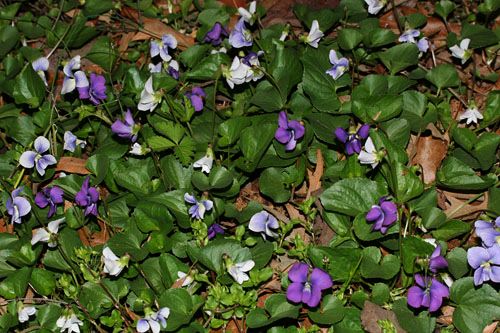
  1. Violets in deep purple and bright white. Lovely as a tiny bouquet OR if you get them at their peak, they can be "candied" to use on cakes and such!


  2. Buttercups -- in their bright and perky yellow color -- just put one under your chin and if your skin shows a yellow tinge then you like butter!!???


  3. Dandelions -- I know ... they are pesky little plants but I've been told that they are good for wine and salad, albeit with a rather bitter taste. Have you ever had Dandelion Wine? :(


  4. Burdock -- in case you are not sure about this one, it is fast growing green ground cover with tiny purple flowers. We checked this one out at Russell's Garden Center in Wayland and, yes, it is difficult -- if nearly impossible -- to get rid of this particular ground cover. However, that's the point, isn't it -- it's a "ground cover" -- don't most of want a good ground cover on bankings and such? The answer, of course, is an affirmative one BUT we do not want it to take over where the grass is supposed to grow!


  5. Wild Daisies -- they do pop up in the weirdest places but, then again, they're such happy and perky little flowers! Why bother to get rid of them?!!


  6. Other very tiny five-petal flowers -- not knowing what they are called -- in shades of hot pink, white, and yellow! Not enough to bother with ... once the lawnmower is in action, they disappear ... for a little while, anyway.

Well ... that about covers it!